The world of memory chips often ignites discussions about performance and efficiency. Among the most common types are DRAM (Dynamic Random Access Memory) and SRAM (Static Random Access Memory). Understanding the DRAM vs SRAM difference is vital for industries relying on memory technology. According to a recent report by IDC, the DRAM market is expected to reach $100 billion by 2024, showcasing its importance.
DRAM is known for its high density and cost-effectiveness. It is widely used in personal computers and servers. Contrastingly, SRAM boasts faster speeds and lower power consumption. It finds its applications in cache memory for processors. However, SRAM’s higher cost limits its usage in larger memory quantities. While both memory types serve distinct purposes, the choice can be influenced by specific project requirements.
Evaluating the trade-offs is crucial. Companies must assess performance needs against budget constraints. This reflection encourages a deeper understanding of memory architectures. As we explore the nuances between DRAM and SRAM, it becomes clear that this choice impacts the efficiency of devices significantly.
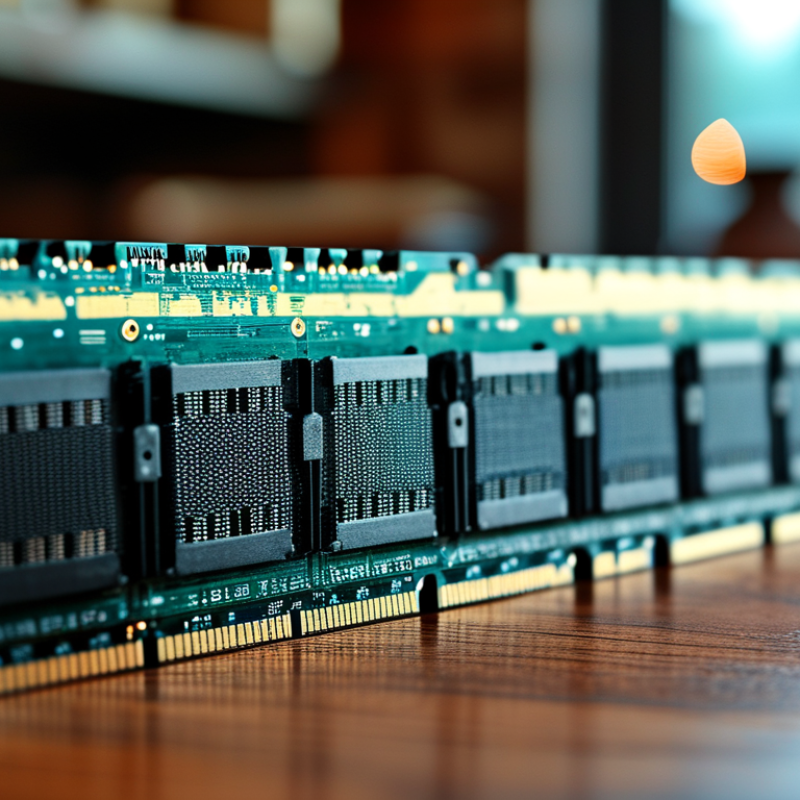
Definition and Functionality of DRAM
Dynamic Random Access Memory (DRAM) is a crucial component in modern electronics. It serves as the primary memory in computers and various devices. DRAM stores data in capacitors, which are like small batteries. These capacitors must be refreshed thousands of times per second to maintain data integrity.
The functionality of DRAM is unique. Each bit of data relies on a capacitor’s charge state. A charged capacitor represents a "1", while an uncharged one stands for a "0". This mechanism allows DRAM to store vast amounts of data. However, it comes with trade-offs. DRAM is slower than SRAM and consumes more power during refresh cycles. Users may experience lag in performance depending on the usage.
Despite its advantages, DRAM has drawbacks. The need for constant refreshing can complicate circuit designs. Additionally, the complexity of memory management can lead to inefficiencies. Understanding these aspects is vital for anyone involved in computer architecture or electronics. Balancing performance and power requirements remains a challenge in optimizing DRAM usage.
Definition and Functionality of SRAM
Static Random Access Memory (SRAM) plays a critical role in modern computing. Unlike its counterpart, DRAM, SRAM is fast and efficient. It uses bistable latching circuitry to store each bit of data. This makes it less complex than DRAM, which relies on capacitors and requires constant refreshing.
The speed of SRAM greatly benefits high-performance applications. It is often used in cache memory for CPUs and GPUs. Not needing refresh cycles means SRAM can provide quicker access to data. However, this speed comes at a cost. SRAM is more expensive to produce and occupies more space on chips. Its relatively lower density limits how much can be integrated into a single module.
Despite its advantages, SRAM is not always the ideal choice. For larger memory requirements, the lower cost of DRAM might outweigh the benefits of using SRAM. The balance between speed, cost, and density is essential. Customers often find themselves weighing these factors when choosing the right memory type for their needs. Making a decision can be challenging when each option has distinct advantages and drawbacks.
Key Differences in Performance and Speed
Dynamic Random Access Memory (DRAM) and
Static Random Access Memory (SRAM) are crucial components in computing.
The performance and speed differences between them are significant. DRAM is slower,
with access times around 60-70 nanoseconds. In contrast, SRAM can achieve speeds as fast as
10 nanoseconds. This speed difference can affect overall system performance, especially in high-demand applications.
DRAM utilizes a capacitor and needs constant refreshing to maintain data. This makes it less power-efficient. SRAM, on the other hand, uses bistable latching circuitry to store data, which allows for faster access and requires less refreshing.
As a result, SRAM is ideal for cache memory in CPUs due to its speed, while DRAM is typically used for main memory.
According to industry reports, SRAM is about 4-10 times faster than DRAM, making it a preferred choice in scenarios where performance matters most.
Tip: When choosing between DRAM and SRAM, consider the application.
Use SRAM for tasks demanding speed and efficiency.
For general memory needs, DRAM is usually sufficient. Always monitor the trade-offs between speed and cost in your designs.
Performance may suffer if the wrong memory type is selected.
Power Consumption Comparison of DRAM and SRAM
When evaluating the power consumption of DRAM and SRAM, distinct characteristics emerge. DRAM, which stands for Dynamic Random Access Memory, consumes less power during operation. This makes it ideal for applications requiring significant memory capacity. It refreshes its data regularly, leading to occasional bursts of higher power usage, especially during read and write operations.
On the other hand, SRAM, or Static Random Access Memory, maintains data without frequent refreshing. However, this advantage comes at an energy cost. SRAM generally consumes more power to maintain its memory state. It is faster and more reliable but is less ideal for battery-operated devices due to its higher energy consumption.
This contrast highlights the balance between speed and energy efficiency. For instance, in mobile devices, the higher power requirement of SRAM could limit battery life. Yet, its performance advantage can be crucial for specific applications. Recognizing these nuances is essential for system designers. They must weigh power consumption against performance needs for optimal outcomes.
What is the Difference Between DRAM and SRAM? - Power Consumption Comparison of DRAM and SRAM
| Characteristic |
DRAM |
SRAM |
| Power Consumption (Active) |
20 mW |
5 mW |
| Power Consumption (Standby) |
2 mW |
0.5 mW |
| Voltage Level |
3.3 V |
2.5 V |
| Speed (Read/Write) |
Access time: 50 ns |
Access time: 10 ns |
| Density |
Higher |
Lower |
| Cost |
Lower |
Higher |
Common Applications of DRAM vs. SRAM
Dynamic Random Access Memory (DRAM) and Static Random Access Memory (SRAM) serve different roles in computing devices. DRAM is often used as the main memory in computers. It is suited for large data storage due to its density and low cost. However, it needs constant refreshing, which can affect speed. DRAM is prominent in applications requiring high capacity, such as laptops and servers.
On the other hand, SRAM is used in cache memory for processors. It is faster and more reliable than DRAM, making it ideal for high-performance tasks. The structure of SRAM allows for quicker access times, but it is more expensive. Thus, it is used in situations where speed is crucial, such as in routers or gaming consoles.
Each type has its unique place in technology. Understanding their applications can lead to better design choices in hardware development. Many developers still weigh cost against performance needs. While DRAM excels in size, SRAM shines in speed. Balancing these factors is key to optimizing performance.
Comparison of DRAM and SRAM Characteristics
This chart illustrates the differences between DRAM and SRAM across five key characteristics: Speed, Density, Cost, Power Consumption, and Volatility. DRAM is generally slower, denser, and more cost-effective, yet consumes more power and is volatile. In contrast, SRAM offers higher speed, lower density, lower cost efficiency, significantly less power consumption, and is non-volatile.
FAQS
SRAM is faster and does not require constant refreshing, unlike DRAM, which relies on capacitors.
SRAM provides quicker access to data, which is crucial for high-performance applications like CPUs and GPUs.
SRAM is more expensive and takes up more space on chips compared to DRAM, limiting its integration density.
Use DRAM for tasks needing large memory storage, such as main memory in laptops and servers, where cost is a factor.
SRAM can be 4-10 times faster than DRAM, with access times as low as 10 nanoseconds.
Yes, the decision involves balancing speed, cost, and memory density based on your application needs.
SRAM is ideal for applications demanding speed, such as gaming consoles and high-performance routers.
Yes, selecting the wrong memory type can lead to slower performance and inefficiencies in system design.
Yes, SRAM's high cost and lower density can limit its use, especially for larger memory requirements.
Conclusion
This article explores the DRAM vs SRAM difference by delving into their definitions and functionalities. DRAM, or Dynamic Random Access Memory, is a type of memory that requires constant refreshing to maintain its data, making it slower but more cost-effective for larger storage sizes. In contrast, SRAM, or Static Random Access Memory, maintains data without refresh cycles, offering faster access times but at a higher cost per bit and requiring more physical space.
The key differences in performance highlight that SRAM is typically faster than DRAM, which impacts their respective applications. While DRAM is commonly used in main memory for computers and mobile devices due to its ability to store larger amounts of data economically, SRAM is often utilized in cache memory for processors where speed is critical. Additionally, power consumption varies between the two, with SRAM generally consuming more power than DRAM in larger applications, although individually, SRAM modules can be more efficient. Understanding these distinctions is crucial for selecting the appropriate memory type based on specific needs.

 CoreByte