China’s DDR6 development expectations are drawing attention as memory makers and technology users look beyond DDR5. The key question is not simply when DDR6 will arrive. It is whether standards, chip designs, controllers, and manufacturing capacity can mature together. These pieces move at different speeds. That distinction matters.
In China, expectations should be assessed through verifiable signals: participation in standards work, published engineering results, prototype demonstrations, and progress in memory packaging and controller support. Announced plans can indicate direction, but they do not prove that products are ready for broad commercial use. The picture is not complete. Public information may also leave important details unclear, including production yields, performance under sustained workloads, and compatibility across platforms.
For buyers and developers, the practical gains will depend on more than headline bandwidth. Power use, latency, cost, and system stability will shape DDR6’s value in servers, AI infrastructure, workstations, and future consumer devices. A faster memory interface is useful only when the processor and software can make effective use of it. China’s development path will therefore involve both advanced chip engineering and the less visible work of qualification and ecosystem support. Timelines remain uncertain, so comparisons should separate confirmed milestones from forecasts. This overview examines the technical signals, industry constraints, and realistic adoption expectations behind China’s next memory-generation efforts.
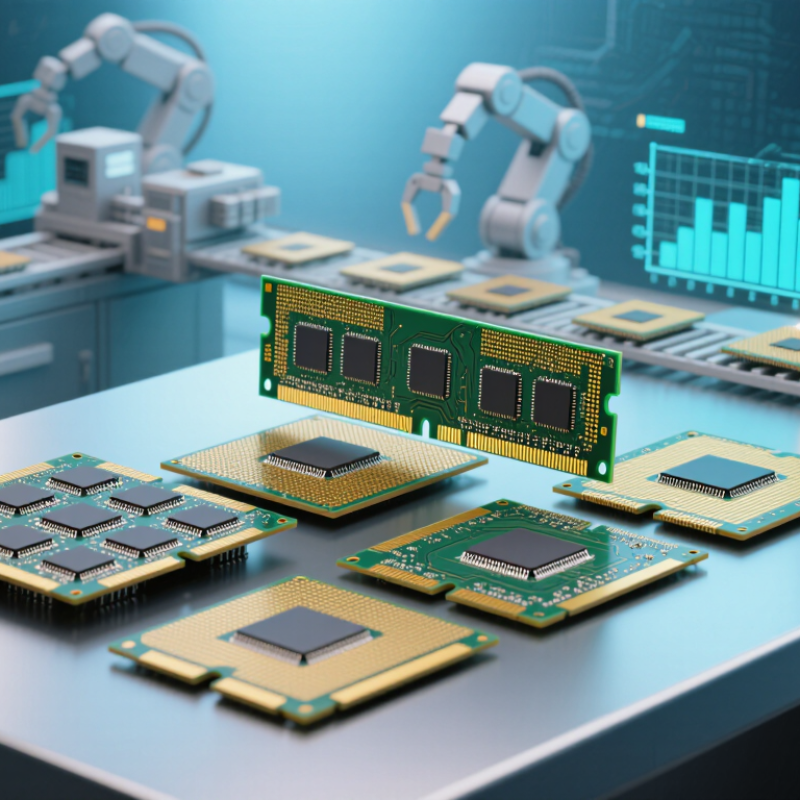
DDR6 is the next step in synchronous dynamic random-access memory, designed to move more data per second than DDR5. The unit matters: MT/s measures transfers, not clock frequency. JEDEC’s JESD79-5C DDR5 standard specifies data rates up to 6,400 MT/s, providing a useful comparison point. Early DDR6 roadmaps discussed at the IEEE International Memory Workshop have indicated targets around 12,800–17,600 MT/s. These are development expectations, not guaranteed shipping specifications.
A large jump.
Higher transfer rates could help feed data-hungry processors and accelerators, but bandwidth is only one part of the picture. DDR6 must also manage power, signal integrity, latency, and heat across densely packed memory modules. Those trade-offs shape real performance. A fast headline number may not mean a faster application in every workload. Exact timing, voltage, and module details can change as standards work progresses, so early figures deserve caution. That distinction is easy to miss. For system designers in China, the practical question is not just when DDR6 arrives, but whether compatible processors, boards, and manufacturing capacity mature together. Public roadmaps are useful clues, but they are not product guarantees.
DDR6 development will depend on global agreement on electrical requirements, signaling, power behavior, and module compatibility. A published specification is only one milestone. Controller design, manufacturing readiness, and platform validation must follow. These steps rarely move in perfect sequence.
Timing remains uncertain. Industry discussions have pointed to standardization and early engineering work around the middle of this decade, but estimates are not launch commitments. As of 2026, buyers should look for confirmed specifications and working test platforms, rather than treating a projected year as a guaranteed arrival date. The gap can be substantial.
In China, development will rely on coordination among memory producers, controller teams, module makers, and system designers. Engineers will need to test signal integrity at very high transfer rates, including across crowded circuit boards and under sustained workloads. Small layout changes can matter. So can heat and power limits. Local progress may be visible in prototypes before dependable, high-volume products appear. That is an imperfect measure, though: a demonstration proves feasibility, not stable yields or broad compatibility. Until standards and validation mature, DDR6 timelines should be treated as moving targets.
Global DDR6 Standardization and Expected Development Timeline
The ranges shown are an illustrative industry outlook, not confirmed release dates. DDR6 timing depends on global standardization and subsequent platform validation. China-specific adoption dates have not been officially established and are likely to follow standards and ecosystem readiness.
China’s DDR6 outlook depends on more than a new memory standard. It depends on research teams, process control, packaging, and the ability to test systems under sustained load. Work in universities and industrial laboratories can build expertise in high-speed signaling, circuit design, and memory-controller coordination. These skills matter when data moves at far higher rates and small timing errors become costly.
The picture is not complete. Public information does not establish a firm China-specific DDR6 launch date or prove that local production is ready for volume deployment. Research progress may appear first in papers, prototypes, and engineering samples, while commercial readiness requires repeatable yields and stable supply. A test board running in a lab is not the same as memory that performs reliably across servers and consumer devices. That gap is easy to overlook.
China’s broader memory industry can support development through chip design, wafer fabrication, packaging, and system testing. Yet advanced memory depends on close coordination across these stages. Engineers must also manage power use and heat, especially in dense computing systems. The details are unforgiving. Expectations should therefore stay measured: strong research capacity can shorten learning cycles, but it cannot by itself guarantee a rapid DDR6 rollout.
DDR6 is expected to raise memory bandwidth substantially over DDR5, but exact speeds and launch timing remain subject to standardization and platform design. Higher data rates could help processors move large datasets more quickly, especially when several workloads compete for memory access. Yet bandwidth alone is not a complete measure of performance. Latency, power use, heat, and memory-controller support will also shape real results. Still early.
In China, potential applications include AI training and inference, scientific computing, cloud data centers, and advanced graphics systems. Faster memory may reduce bottlenecks when servers process large models or when engineering teams run detailed simulations. Compact systems could also benefit if future designs deliver more bandwidth without excessive heat. That balance is not guaranteed. Data-center operators will need to weigh performance gains against electricity and cooling costs, while device makers must validate compatibility across processors and modules. Early product claims should be treated cautiously; independent testing under realistic workloads will matter more than peak figures. I expect DDR6 adoption to arrive gradually, with the clearest benefits appearing first in systems that are genuinely memory-bound.
China’s DDR6 prospects will depend less on headline speeds than on repeatable yields. JEDEC’s published DDR5 baseline reaches 6,400 MT/s, a useful benchmark for the testing and signal-integrity demands ahead. DDR6 targets should be treated cautiously until a complete public specification and validated products are available. A faster interface means tighter timing margins. Not a small gap.
Manufacturing adds another hurdle: process control must stay consistent across wafers, packages, and memory modules. Small variations can trigger errors during high-speed testing, so prototype success alone proves little. SEMI’s 300mm Fab Outlook projected about US$110 billion in global equipment spending for 2025. That figure signals heavy capacity investment, but it does not guarantee DDR6-ready tools or materials will be available locally. Supply-chain planning must also account for testing equipment, substrates, and dependable component supply. One uncomfortable point: public roadmaps rarely reveal production yield. I would not treat a projected transfer rate as a shipping promise; that distinction is easy to blur.
| Development Dimension | Current Expectation | Status and Evidence Level | Implications for China |
|---|---|---|---|
| Standardization | DDR6 is expected to succeed DDR5, but detailed specifications and implementation requirements must be finalized through the relevant standards process before products can be treated as interoperable, standard-compliant DDR6. | Publicly discussed development direction; final specifications and schedules should be checked against formal standards releases. | Memory designers and platform developers will need to track the standard closely. Early design choices may require revision as specifications mature. |
| Data-rate expectations | Industry projections commonly place early DDR6 targets above DDR5’s standardized 6,400 MT/s baseline; figures around 12,800–17,600 MT/s are estimates, not a confirmed DDR6 specification. | Forecast range only. It should not be interpreted as a guaranteed launch speed or a finalized standards limit. | Higher transfer rates could improve bandwidth for servers and high-performance computing, but require coordinated progress in memory chips, modules, processors, and system boards. |
| Memory architecture | DDR6 is expected to advance memory-channel efficiency and data throughput. Exact channel structure, signaling details, and module configurations depend on the final specification. | General architectural expectation; specific configurations remain subject to formal definition. | Controller design, module layout, and platform validation will need to be developed together rather than treated as independent upgrades. |
| Signal integrity and power | Faster signaling increases sensitivity to noise, timing margins, board layout, and power-delivery quality. Power consumption will depend on the final signaling scheme, operating voltage, and workload. | Established engineering constraints for high-speed memory; DDR6-specific values are not assumed here. | Advanced measurement, simulation, and system-level testing will be important. Thermal and power targets must be evaluated at the module and whole-system levels. |
| DRAM process and manufacturing yield | Commercial production will require memory dies, packaging, and manufacturing processes that can meet performance, reliability, and yield targets at competitive cost. | General manufacturing requirement; no unverified China-specific yield or capacity figures are presented. | Scaling pilot designs into dependable high-volume output is a key challenge. Yield learning, process control, and qualification time can affect launch timing and cost. |
| Packaging and module production | Modules must combine compatible memory devices, power and support components, and a suitable printed-circuit-board design, then pass electrical and reliability testing. | Established module-development and qualification requirements; exact DDR6 module details depend on the standard. | Domestic module readiness will depend on access to qualified components, advanced test capability, consistent materials, and close coordination with platform makers. |
| Controller and platform readiness | Processors and memory controllers must support the new memory generation, with firmware, board designs, and validation tools updated accordingly. | Standard platform dependency for each new DRAM generation. | Even if memory components are available, broad adoption may lag until compatible platforms are designed, tested, and qualified for production. |
| Supply-chain resilience | DDR6 development depends on coordinated supply of specialized manufacturing equipment, materials, test systems, packaging inputs, and design tools. | Supply-chain categories are established; availability and sourcing conditions can change over time. | Multiple qualified sources, inventory planning, and domestic capability development can reduce exposure to component or equipment bottlenecks, although substitution may require requalification. |
| Likely adoption sequence | A typical transition would move from standards and engineering samples to platform qualification, initial production, and wider deployment. Broad adoption is expected to follow—not precede—standard and ecosystem readiness. | General industry adoption pattern; a firm China-specific commercial launch date cannot be inferred from projections alone. | Server and other performance-sensitive markets may have stronger early incentives, while broader adoption will depend on platform availability, pricing, and supply. |
| Key outlook | DDR6 offers a potential path to substantially higher memory bandwidth, but performance targets, production timing, and commercial readiness remain dependent on standards, manufacturing, and platform progress. | Outlook summary; projected specifications and schedules are subject to change. | China’s progress will be shaped by the full ecosystem—from DRAM process and module production to controllers, testing, and dependable supply—not by any single development milestone. |
| Note: Projected DDR6 speeds are industry estimates rather than confirmed standard limits. This table does not present company-specific claims or unverified China production statistics. | |||
DDR6 is a developing memory technology designed to transfer more data each second than DDR5. A faster headline rate alone does not guarantee faster applications.
Early development roadmaps discuss roughly 12,800–17,600 MT/s. These are targets, not confirmed shipping specifications. A big jump.
MT/s measures data transfers per second, not clock frequency. DDR5 provides a comparison point, with published rates up to 6,400 MT/s.
No. Results depend on the workload, latency, power use, signal quality, and heat. The details matter.
Timing remains uncertain. As of 2026, confirmed specifications and working test platforms are better clues than projected dates. Not yet.
Compatible processors, memory controllers, circuit boards, and manufacturing capacity must mature together. Crowded board layouts can make signal testing harder.
No. A prototype shows feasibility, but it does not prove stable production yields or broad compatibility. That gap is easy to overlook.
Consistent results are needed across wafers, packages, and memory modules. Testing equipment, substrates, and dependable component supplies matter too.
No. Public roadmaps offer clues, but final specifications and validated products can differ. I may be overreading early numbers.
DDR6 is the next anticipated generation of synchronous memory, expected to build on DDR5 with higher data rates, greater bandwidth, improved power efficiency, and updated signaling and channel designs. Its development will depend on international standardization, validation, and the gradual availability of compatible processors and platforms, so broad adoption is likely to follow rather than precede the completion of key specifications. These DDR6 development expectations remain subject to change as technical requirements and industry schedules evolve.
In China, established research capabilities and a broad electronics manufacturing base could support work on memory design, testing, packaging, and system integration. If the technology delivers its expected gains, it may benefit data centers, artificial intelligence workloads, high-performance computing, and other bandwidth-intensive applications. However, progress will depend on overcoming challenges in manufacturing yield, power and thermal management, production costs, and access to a reliable supply chain. Collaboration across research, equipment, materials, and system development will be important to turning early research into dependable products.

CoreByte